

From soul to subwoofers: Your guide to gigs in 2027

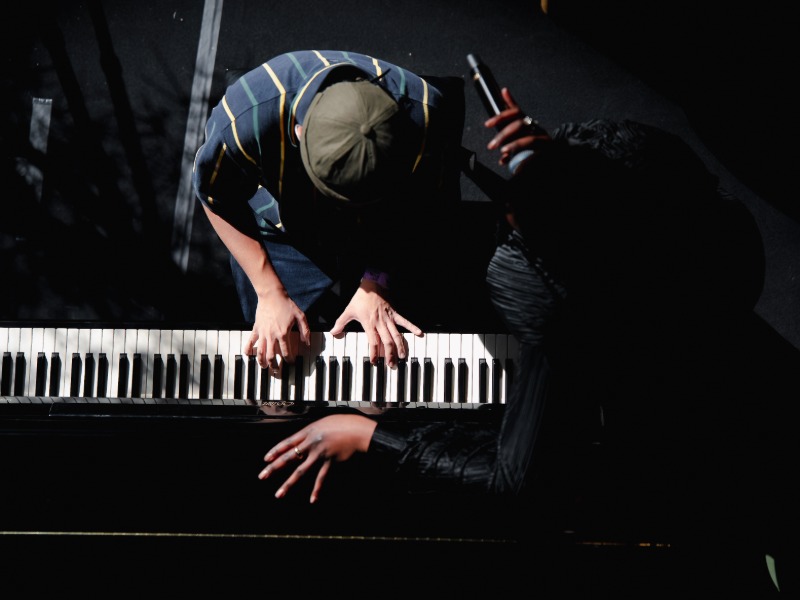
Sydney Festival is starting the year with a rave in The Cutaway, an orchestra backing Western Sydney drill pioneers ONEFOUR, and three of Australia’s finest First Nations artists reinterpreting the great American soul songbook.
Elsewhere, a new generation of sitar virtuosity meets centuries of Indian classical tradition, while Sydney-based experimental musician Marcus Whale takes audiences on a decidedly darker excursion into the underworld. It’s a January music program that moves freely between genres, generations and musical traditions, with plenty to reward those willing to venture beyond their usual listening habits.
Get your dance on
 House of Mince and Sultry Group have spent years shaping Sydney’s nightlife, but their next party comes with a rather spectacular setting. For one night only, The Party will transform The Cutaway, Barangaroo’s vast sandstone cavern, into a free, adults-only rave. Sultry Group will open proceedings with live musicians improvising alongside DJs, before House of Mince takes over with the underground electronic sounds, queer club culture and irreverent spirit that have made its parties a fixture of Sydney’s after-dark scene.
At City Recital Hall, Sydney DJ and curator Munasib has assembled a formidable lineup for Club Shétu, a five-hour session exploring the sounds of the South Asian diaspora. ZAINAB, Panjabi Hit Squad, Dar Disku, Surya Sen, 3ARSA and Munasib herself make up the bill, with musical connections stretching from Lahore to London, Bahrain to Bristol. Shétu means ‘bridge’ in Bangla, and the name captures the spirit of a night that connects artists, cultures and musical traditions through the shared language of the dance floor.
Soul, old and new
 At the Metro Theatre, Blak & Blues brings together three of Australia’s finest First Nations voices to reinterpret the music of American soul greats Bill Withers, Donny Hathaway and Etta James. Across three concerts, MO’JU, Budjerah and SOLCHLD will each bring their own musical sensibilities to songs that have endured for generations.
Bill Withers understood the value of leaving space in a song. His melodies were spare, his lyrics direct, and even the simplest arrangements carried enormous feeling. MO’JU, whose own music moves between funk, neo-soul, R&B and pop, applies a fresh musical vocabulary to Withers’ catalogue, including his classics ‘Ain’t No Sunshine’, ‘Use Me’ and ‘Lean On Me’.
For Budjerah, Donny Hathaway’s catalogue foregrounds the gospel-inflected side of his singing. The Coodjinburra singer’s rich, expressive voice carries the unmistakable influence of classic soul, and he will perform his own material alongside Hathaway’s songs following the release of his debut album Gentleman.
Completing the series, SOLCHLD takes on Etta James, whose repertoire ranges from tender ballads to full-throated blues. The Brisbane-based artist draws on jazz, spoken poetry and deep soul in her own work, weaving those influences into the music of one of American soul’s most formidable voices.
British-Chinese siblings Will Gao and Olivia Hardy bring Wasia Project to City Recital Hall for their first Australian full-band performance. Their music combines intimate indie-pop songwriting with classical and jazz influences, anchored by Hardy’s expressive vocals. Following the release of their debut album Nocturne, the duo return to Sydney with a fuller arrangement of songs that have earned them a devoted international following.
Also making his Australian debut is Pakistani-American singer and composer Ali Sethi, whose global hit ‘Pasoori’ introduced millions to his distinctive musical world. Drawing on traditional ghazals, Sufi poetry, contemporary pop and electronic experimentation, Sethi moves freely between musical traditions. On Intiha, his 2023 collaboration with producer Nicolas Jaar, traditional melodic forms are set against exploratory electronic arrangements, extending his music well beyond the sound that first brought him international attention.
Sitar, synths and other detours
 Indian sitar virtuoso Rishab Rikhiram Sharma has introduced a new generation to Indian classical music, building an international following through his Sitar for Mental Health concerts. A disciple of the legendary Ravi Shankar, Sharma combines traditional ragas and meditative passages with contemporary influences, occasionally venturing into unexpected territory, including the Game of Thrones theme. His customised electric sitar, illuminated by 640 LED lights, brings an unmistakably contemporary visual dimension to the performance.
At Bankstown Arts Centre, Sonic Rituals unites two electronic artists whose work draws on their respective cultural traditions. Filipino-Australian producer CORIN presents DIWA, an audiovisual performance combining traditional kulintang gongs, live electronics and imagery inspired by Filipino mythology. Sharing the bill is Cambodian-Vietnamese-Australian producer Maggie Tra, who introduces her deeply personal work Srey’s Refuge, Home at Last.
Tra returns on 16 January with the complete performance, a tribute to her late mother that blends Khmer dance, ancestral instruments, electronic music and visuals by Jo Ngo. Drawing on family history, migration and memory, the work uses contemporary electronic composition to explore the cultural traditions and personal experiences that have shaped Tra’s life.
Drill, doom and the unexpected
 Western Sydney drill pioneers ONEFOUR join forces with the Penrith Chamber Orchestra for Made Men, a world-premiere collaboration at The Joan. With more than 400 million streams and an international reputation, ONEFOUR have become one of Australian hip-hop’s most influential acts. Their hard-edged rhythms and uncompromising lyrics will now be reimagined through orchestral arrangements, fusing two distinct musical traditions, each with roots in Western Sydney, onto the same stage. The collaboration is particularly interesting for the contrast between ONEFOUR’s tightly controlled production and the scale and dynamic possibilities of a live orchestra.
At Campbelltown Arts Centre, Sydney artist Marcus Whale presents ATOPIA, a doom-metal electronic opera that draws audiences into a strange and unsettling underworld. A clown-like figure summons creatures from the other side, while growling subwoofers, cavernous feedback and the crushingly slow riffs of avant-metal outfit Bract provide the soundtrack. Combining live music, choreography and theatrical spectacle, Whale has created a work that exists somewhere between concert, performance art and dark ritual.