

Andrea James x Phoebe Grainer on THE LINE

'The line is still moving'
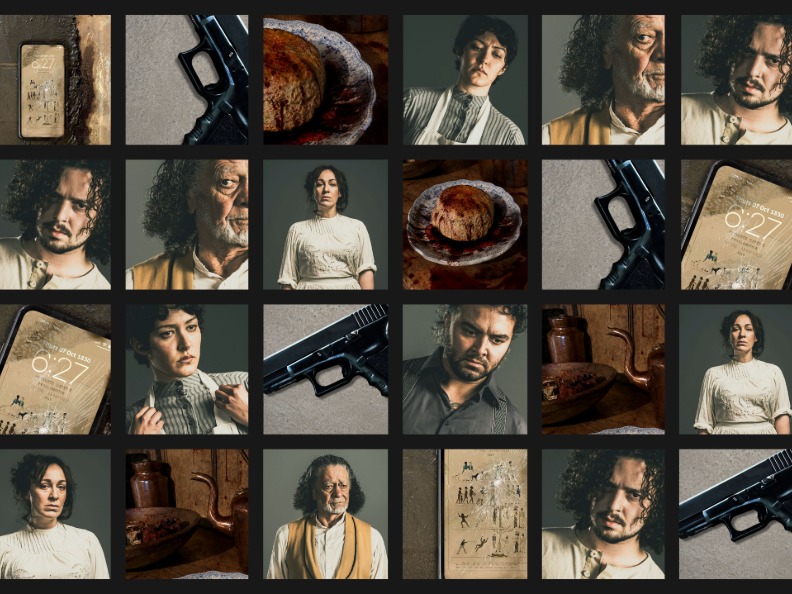
In our new Guest Features column, Sydney Festival brings Australian writers and artists together in conversation with the lead creatives in our program to highlight and deepen the connections between our work and the wider local arts community.
Kuku Djungan and Muluridji actor and writer Phoebe Grainer sat down to yarn with Andrea James, the award-winning playwright and newly appointed Artistic Director of ILBIJERRI Theatre Company, about acclaimed Palawa playwright Nathan Maynard’s new epic, THE LINE. A true multi-hyphenate, Maynard is the author of eleven full plays, a visual artist, writer and director of stage, film and TV. His previous works include The Season, 37, At What Cost, A Not So Traditional Story and The Box, which he co-wrote with Murri writer Rob Braslin. The Box won nine Tasmanian Theatre Awards, including Best Writing and Best Direction. He was a Balnaves Fellow in 2019, is a Churchill Fellow, and received the Sidney Myer Fellowship in 2025. His new play THE LINE will have its world premiere during the Festival, on 21 January. The following has been edited for length and clarity.
Tell me about THE LINE. What's the yarn?
THE LINE is a story that Palawa playwright, Nathan Maynard, was born to write. Every now and then for a playwright, a story lays in wait for the right time for them to write it. And right now, this is the right time for Nathan Maynard to be writing this story. This play is so close to his heart – it's about Palawa survival and Palawa determination, a major truth-telling that seeks to debunk the whole myth of “The Black Line.”
The Black Line was a terrible colonial campaign that was kicked off on the 7th of October in 1830, where over 2,000 soldiers, squatters, colonists and ex-convicts basically formed a series of lines across from one end of Lutruwita down to the other to push the clans off. And their intention was murderous. It was brutal. There's always been this myth of like, oh no, all of the blackfellas in Lutruwita died out. That's absolutely not the case. Nathan's play really demonstrates that.
It's a play about two women, a Palawa servant, and a squatter's wife who were stuck in a bush hut while all this raging was happening. In the middle of nowhere, two vulnerable women in this violent colony that's lawless. The tension is absolutely palpable. But the thing is, is that Nathan comes at it with this dark humour that is hilarious. It helps us kind of process this really vicious history.
It is not an historical play, even though it's based on historical events, there's this whole host of time bending that happens where Nathan is determined to demonstrate that “the line” has not stopped moving, that the deaths are still occurring. The colony is still marching through our communities, in all sorts of ways.
What inspires you about this play and how is it important for stories like this to be part of Australian literature?
It's about truth-telling. As Blak playwrights and theatremakers, we've worked really hard to get into these places where we can have our side of the story told, because what is out there is incorrect or it's only told from one perspective. This play is about nation building, it's about understanding each other so that we can keep living together, but it also asks for the killings and the arrests and the chasing to stop. When I hear Nathan talk about this work, that's the impetus I hear in his voice. This is why he wants to do it. You can't be a survivor of that kind of concerted effort to wipe out your people without having such a strong response to it. It's made Nathan and his family really strong, to survive that and to continue to survive, you know, it's not easy.
THE LINE is composed of live film, movement and text. How do the different modes support the narrative?
Nathan and Rachael are very determined for this to not be just a history piece and all of the design really demonstrates that, like Richard Roberts' design is just so fluid, there's no walls really, and the fourth wall's constantly broken down, things just slide all around the set - it's filmic. The audio-visuals bring a sense of the landscape into it and the archival material helps to demonstrate that this absolutely happened, it's not make-believe. Nathan is drawing on real life experiences that his family and people endured and survived. We all have to look at this mirror to Australia.
Nathan Maynard and Dr Rachael Maza AM co-directing. How has that changed the work?
Rachael's really spearheaded working hand in hand with the story-holders and the cultural experts and sharing the skills and knowledge amongst each other. It's a really fantastic way to work because you've got your cultural authority in the room, you've got the link to the community there, they're the experts and if they can't answer the question, they'll bring their elders into the room. It's a really important way to work and it brings people up. It's an exchange. It's really important to have that cultural determination and an equal distribution of decision-making power. It's very much a collaboration. Blak theatre, you know, that's just a way of working that we've done for generations. It makes sense and it works really well.
What has the process been like supporting a work like THE LINE at ILBIJERRI?
It's an epic work of scale. There had to be long periods of deep listening and going back to Country and working out the right form for the work. Nathan's a really hard worker, he took the ball and ran with it and laid down some really fantastic foundations really early. It was just a matter then of bringing everybody together to kind of go, okay, which way does this story want to be told?
And knowing that for Nathan, he wanted to bring in the modern contemporary referencing. So it has had to be really inventive and robust with form. I think that was always the vision for it. It just really needed the time and the space. And it's paid off. It's absolutely paid off. I'm so excited for this work.
How important is it for works of scale like THE LINE to connect to places like the Sydney Opera House, to connect to these big spaces that have big audiences?
I'm really excited to think that this story is going to go to such an iconic place of such international cultural significance. The fantastic thing about Sydney Festival is they have such great engagement with mob and community and they're going to bring those people into the space as well.
For ILBIJERRI there's this sort of two-way reach. We want a really broad general audience, but we always bring it back to home. So going back to Lutruwita, as the second port of call for this leg, is absolutely vital to this work. I think it's just going to resonate and vibrate in that community in such a special way, so every leg is going to impact in its own kind of unique and special way.
To see this as a kind of a headliner in festivals where it sits within an international theatre context is just absolutely fitting. It's what ILBIJERRI and Nathan have worked so hard over the decades to do to kind of rightfully earn our place on these big stages, because it's important that everybody gets to experience these stories and these retellings, it's what makes the social fabric of Australia richer.
Did you learn anything while making this show that you want to carry or hope to carry forward, personally or artistically, and what surprised you or what did you discover?
What I've really loved about this project is the way that Nathan and Sinsa Mansell have brought in Uncle Jim Everett into the process in this really easy but also vital way, and I've really enjoyed and been privileged to witness the way that cultural authority and knowledge just really osmotically moves into the story and into the production. When Uncle Jim sits in that room everybody can, you know, explore and bring their best selves to the story because they know they've got a knowledge holder in the room that can pull them up if they get it wrong, it brings such authority and comfort at the same time. There's this really nurturing cultural space, I think we take it for granted sometimes, you know, as First Peoples in a theatre space. And I don't think audiences will even fully understand the importance of that. But for this project and for our company, for Nathan, for the cast and crew, it's been really important.
The cast for THE LINE is amazing, coming from all different places across the nation. How important is it to work with First Nations actors from all across Australia?
Yeah, really important, it shows Australia that we are very diverse people. I love how our mob, our actors come to these stories with such respect and understanding. They're fresh water and they're salt water and their Islanders and their desert people and they come from cold country - it just reflects so beautifully the diversity of our language groups and nations. I think it's important for Australian audiences and international audiences to just understand that through our physical demonstration, how diverse we are, and bloody talented.
And what's really great as well is that Nathan's brought Palawa people in to do placements and to kind of build up their skills and knowledge base to take back home with them, because their work just keeps getting stronger and stronger on that island. You know, it's really building up. I wouldn't be surprised if a theatre company comes out of there really soon.
Why this play now? What does it speak to in our current context?
Well, we just had a failed referendum. We're sitting here in Victoria with a potential Liberal government that's going to roll back our whole heartfelt treaty process. Conservative forces are rising in this country and they're mirroring themselves on other parts of the world. We just have to keep putting these stories out here and providing more places for genuine connection and understanding, because there's so many forces that want to separate us, that want to have us sort of fighting against each other, or just consuming so it's really important right now. It feels more important now than ever, actually.
And what's really great as well is that Nathan's brought Palawa people in to do placements and to kind of build up their skills and knowledge base to take back home with them, because their work just keeps getting stronger and stronger on that island. You know, it's really building up. I wouldn't be surprised if a theatre company comes out of there really soon.
What do you love about THE LINE?
I love its power. I love that it's coming from a real place of heart and passion and it shows us real strength. Even though there's a brutality to it, there's a strength and a hope in there that you can hang on to, search for, and find.
And at times it's really naughty. You're like, oh Nathan, you just can't say that or do that you know. So yeah, I like that, I love that it keeps you on your toes, but it just has massive heart. I've seen and heard it so many times and every time it gets me. Like every single time, the strength of what it has to say gets me and I understand it in different ways. It’s got such heart, integrity and meaning, and it's alive and true.
What can the audience expect from watching THE LINE?
They can expect to be challenged and confronted and intrigued, and they can expect to fall in love with at least two characters. People will go away talking and thinking about it, and maybe wanting to know a little bit more because, like a lot of these kind of dark histories to do with massacres and war, it's just been deliberately withheld from them. And I think for us mob, it just shows how we survive, you know, through humour, through sheer determination, through our connections with each other, through hanging on to our stories and knowledge with all our might, I think mob are going to feel really fired up and empowered by what they see.